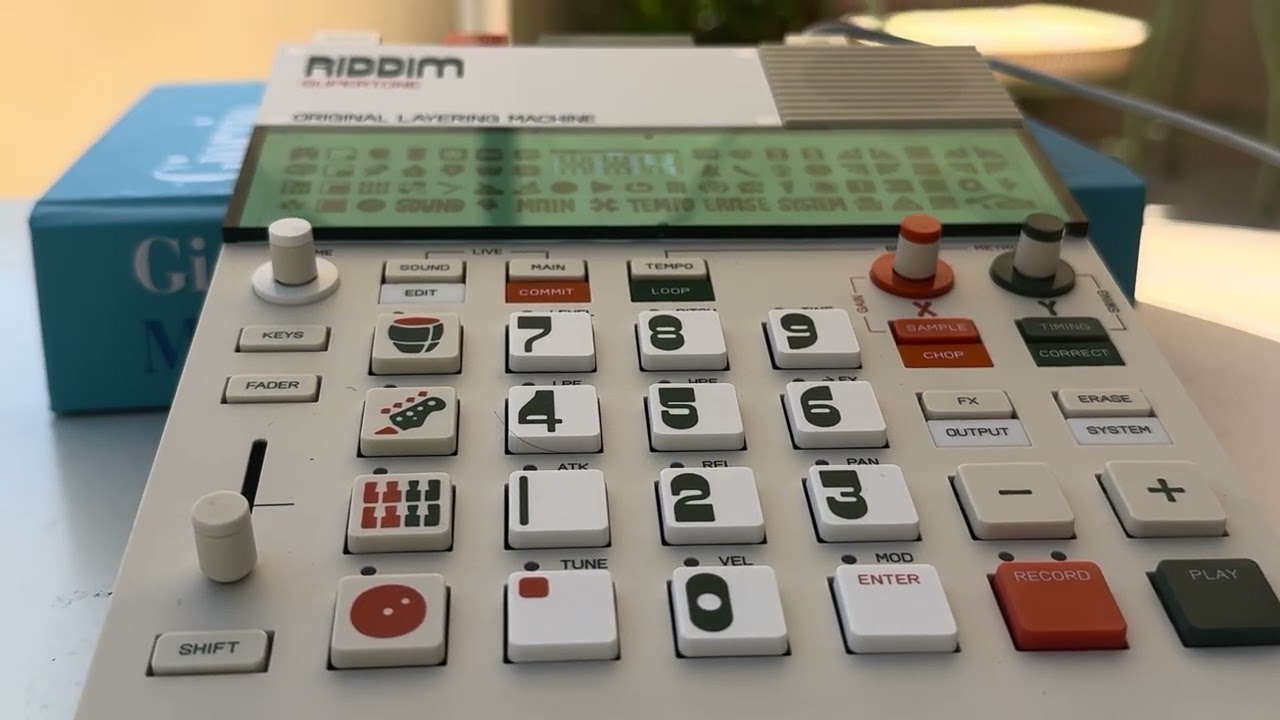
I’ve been reverse-engineering the SysEx protocol used by the EP-133 K.O. Il and EP-40 Riddim, and I now have working tooling that can read, modify, generate, upload, and verify complete projects and sample libraries. It’s open sourced at: GitHub - kmorrill/ep-series-sysex: Unofficial open-source EP-133 and EP-40 SysEx protocol documentation and tooling · GitHub
That covers pads, sequences, automation, scenes, songs, mixer settings, effects, sample metadata, Supertone synth engine, and the sample library.
Projects can be generated offline from a structured
JSON description and pushed to the hardware as fully playable arrangements. In the attached video, I generated a complete multi-scene song — snare builds, filter automation, dub-delay throws, synth lines on the Riddim’s supertone engines, full song mode - from a JSON file, uploaded it, and verified every scene against the device’s own MIDI and USB-audio output.
It’s documentation-first: byte-level specs for the project format and wire protocol, so you can build in any language — the Python package is a reference implementation. Everything is capture-verified against real EP-133 and EP-40 hardware on OS 2.5.1, and it builds on and cross-checks earlier community reverse-engineering (ep133-ppak, ep133-krate, knockout, ep133-export-to-daw - credited in the repo).
What excites me most is what the community could build on top of this:
-
proper offline project and sample libraries
-
visual editors and kit generators
-
project conversion and stem workflows
-
generative sequencers and companion apps that play alongside the EP over MIDI and USB audio
-
and since sounds can be downloaded, processed, and re-uploaded: external effects, more sophisticated time stretching, loop prep, multisample generation, freeze/bounce, even Al-assisted sound design - far beyond what fits in the hardware Ul
The K.O. II and Riddim are already great physical instruments. My hope is that this keeps the immediacy of the hardware while adding the editing, automation, storage, and processing power of a tablet or phone.
Honest limitations: this is unofficial and not affiliated with Teenage Engineering. System-menu settings aren’t writable over SysEx. And these devices can be crashed and require formatting by malformed writes
- the tooling checkpoints and byte-verifies everything, and the docs include a full error taxonomy learned from real incidents — but PLEASE BACK UP your projects and sounds before experimenting.
Two asks: if you own an EP-1320 Medieval, I’d love your help - the family shares one format, so support is likely close, but I can’t verify without hardware. And also: what would you most like to see built with this?